Building an AI-powered wind farm predictive maintenance platform that combines sensor data and drone inspection results into a single application.
Design Approach & Tight Timelines
This was a high-stakes project from day one. The CTO was directly involved, and we had just five weeks to deliver a working demo. I was tasked with bridging the gap between technical constraints and user needs. I expeditiously translated abstract requirements into an interface that mirrored the operators' actual mental models.
To keep up the pace, we set three main milestones. First, we spent three days on research and workshops with the turbine maintenance engineers to find out what was needed. Next, we used two days to test wireframes and get feedback. Finally, we quickly built high-fidelity prototypes to guide the development.
We aimed to have a full low-fidelity wireframe and a couple of high-fidelity screens ready in the first week. This way, development could start while we continued designing the rest of the screens alongside.
Research
When we started, both a senior leader and I had limited domain knowledge in turbine maintenance. We quickly closed this gap by speaking with site engineers, conducting competitive analysis, and leveraging secondary research. We connected with engineers across the globe, who walked us through their day-to-day workflows and shared firsthand insights.
This research gave us a strong understanding of how predictive maintenance works, including the key sensor data and metrics involved. However, with tight timelines, we had to be deliberate about focus. Our goal was to design a demo that felt realistic and grounded in real-world workflows, while highlighting our strengths in AI and machine learning, without getting lost in unnecessary complexity.
We also looked back at our previous computer vision projects to find useful interaction patterns that could help guide this work.
Some of the key insights that informed the Solution
Different Roles = Different Definitions of “Value”
Insight: Executives focus on financial impact and risk, while engineers prioritize real-time status and maintenance details. Both value fleet performance, but their definitions of value are distinct.
Impact on Design: We created role-based dashboards with tailored KPIs and entry points to support effective decision-making. Executives saw ROI, downtime cost, and risk forecasts upfront, while engineers accessed alarms, task queues, and sensor trends all within a shared navigation structure.
Big Picture + Drill-Down Improves Decision Making
Insight: Executives require a fleet-wide overview, whereas engineers need detailed, turbine-level insights to manage daily operations.
For the design, we organized information from the fleet level down to each site and turbine. This way, users could start with the big picture and then dig into the details as needed.
“Tech Output” ≠ “Actionable Insight”
Insight: Experts trust sensor data, but leadership struggles to link it to business outcomes. This gap makes justifying predictive maintenance challenging.
We turned technical results into business-focused visuals, like showing a predicted gearbox failure as a potential $1.2 million loss. Each prediction included a confidence level, helping connect engineering details to business decisions.
Building Empathy
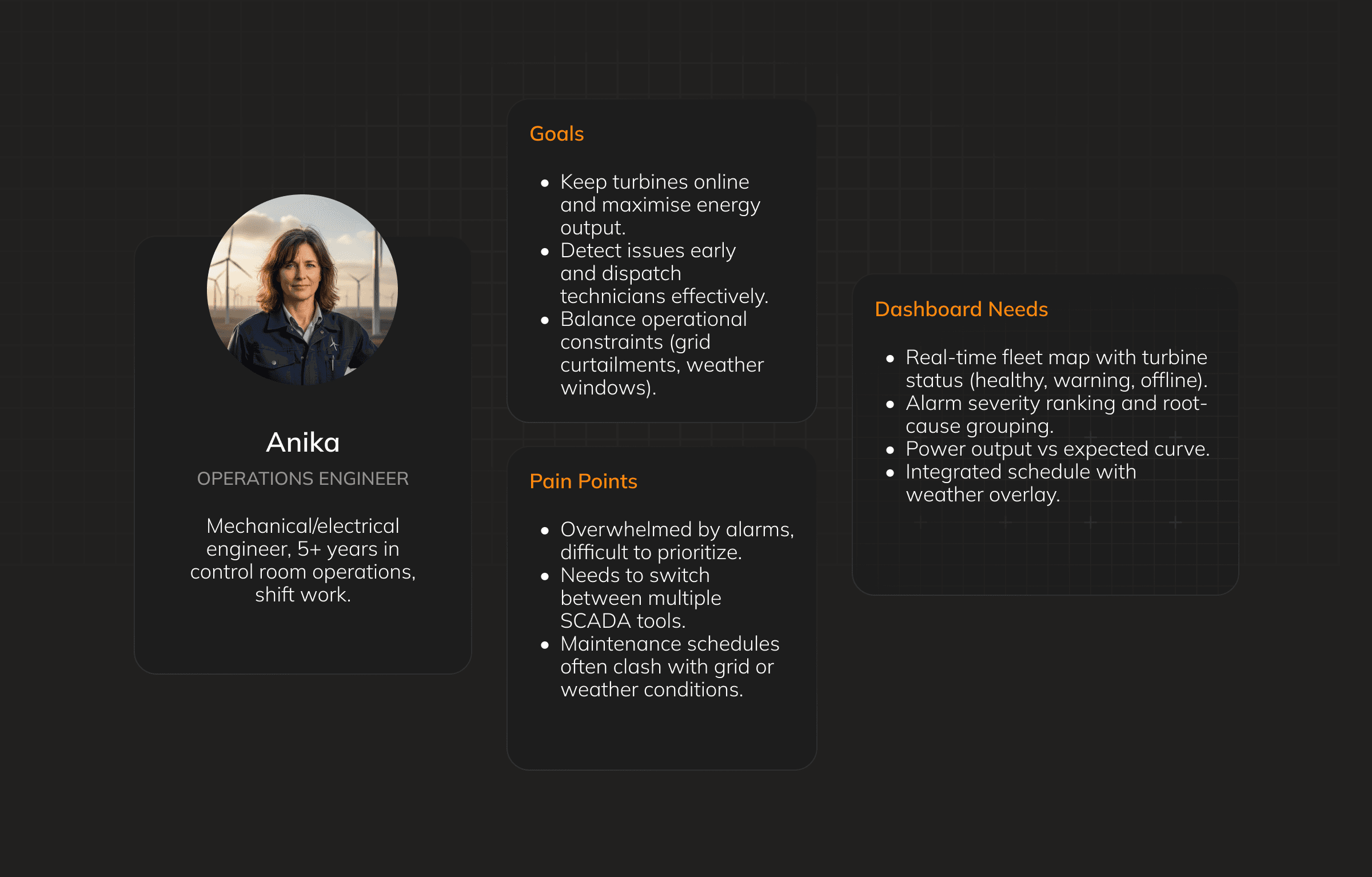
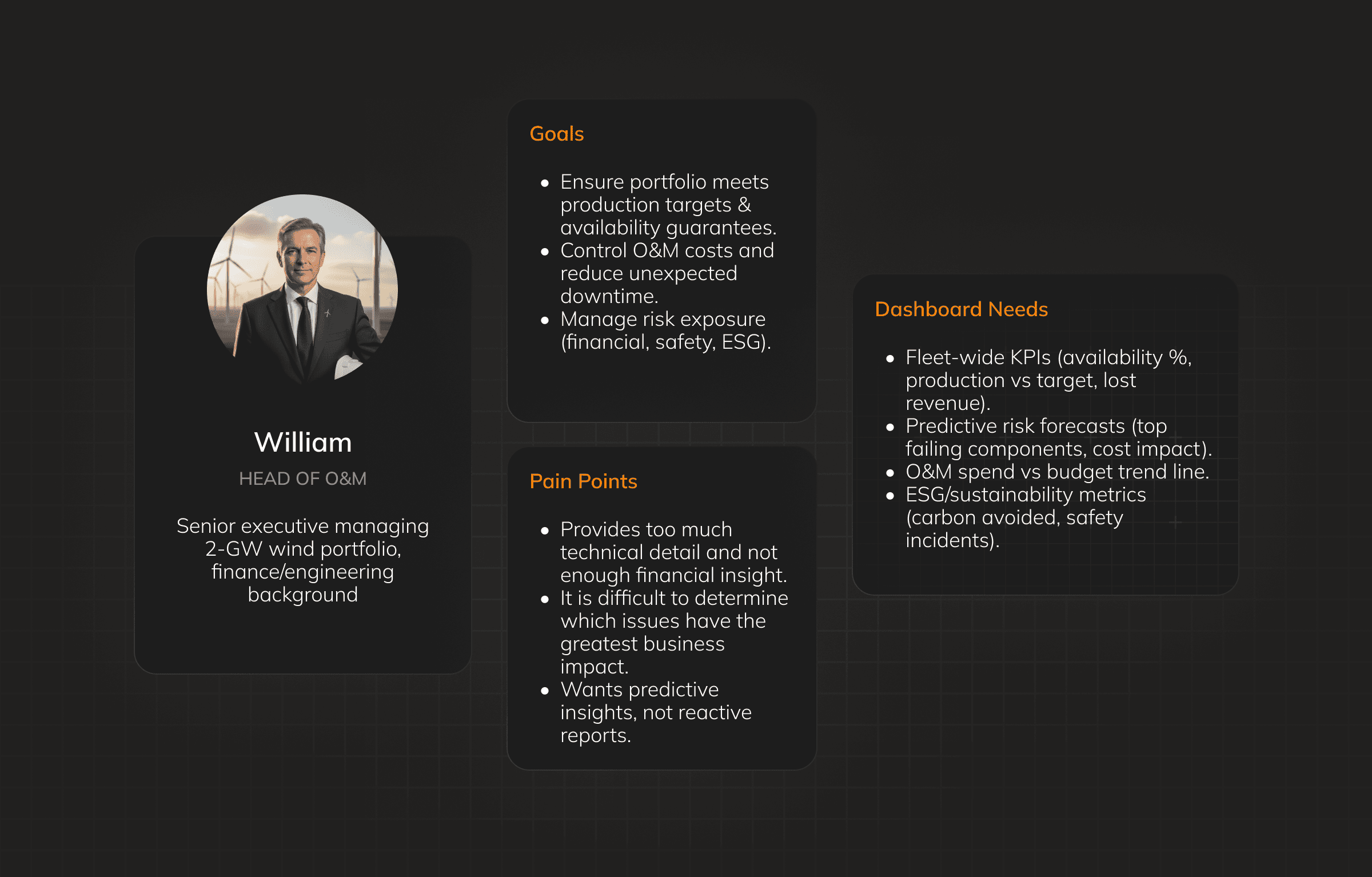
Based on the interview insights, I quickly developed a Proto Persona to build empathy for the primary user group, i.e. Operations Engineer and Head of Operations and Maintenance. This process was accelerated by using GenAI tools for rapid research synthesis and persona creation
Translating Research into Structure
The most challenging part was synthesising our research into a compelling data narrative. The design had to meet two critical requirements: establishing our expertise in AI while ensuring the solution remained accessible and relatable to our audience.
To harmonise these constraints, we used a persona-centric approach, framing content around the user's core need: 'What is the purpose of predictive maintenance for me?' This allowed us to filter and determine the exact KPIs necessary for the MVP.
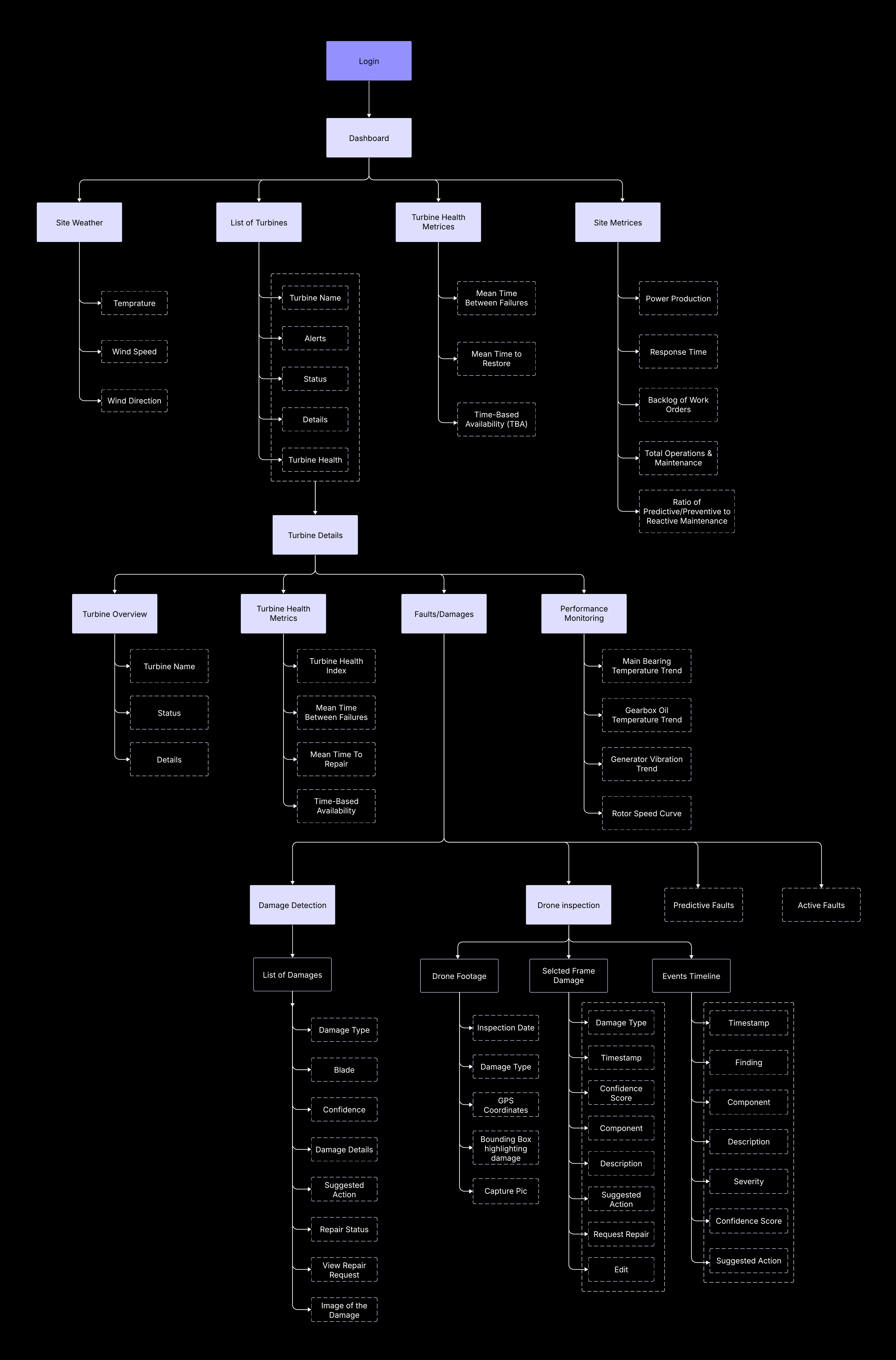
We then decided on progressive information disclosure. We started with the big picture (fleet-level insights) before allowing users to dive into individual turbines. This storytelling approach first provides an overview of how our AI creates preemptive alerts, demonstrating value. Users can then dive deeper into the turbine and alerts view to better understand the problem, troubleshoot, and schedule maintenance.
Below are the finalised sitemap showing data points and content organised for each screen:
Wireframe
Lorem Ipsum
Dashboard
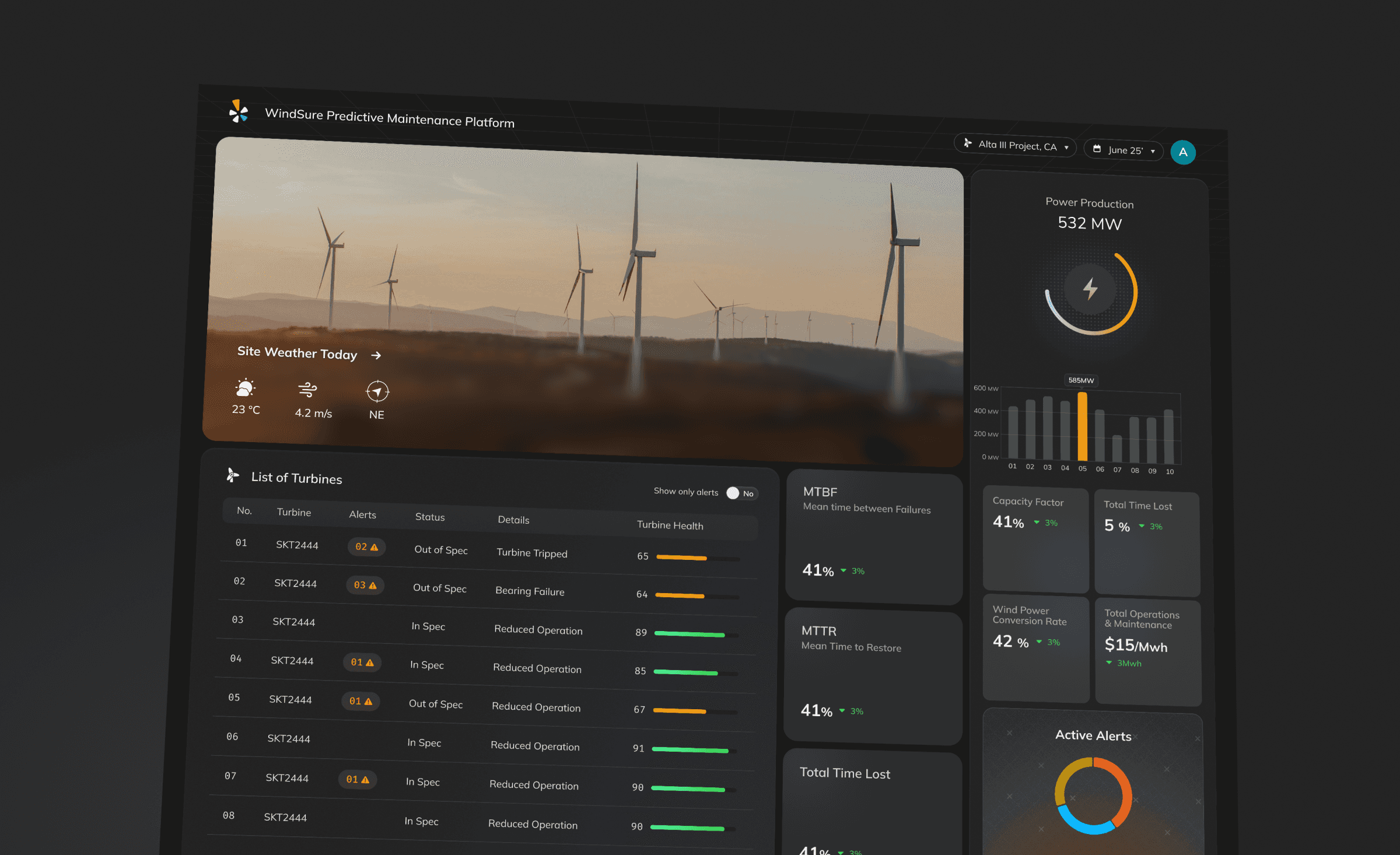
We designed persona-centric dashboards that ensured relevance for every user. Executives viewed high-level financial impact metrics, while the Operations Engineer had immediate access to detailed maintenance and performance KPIs.
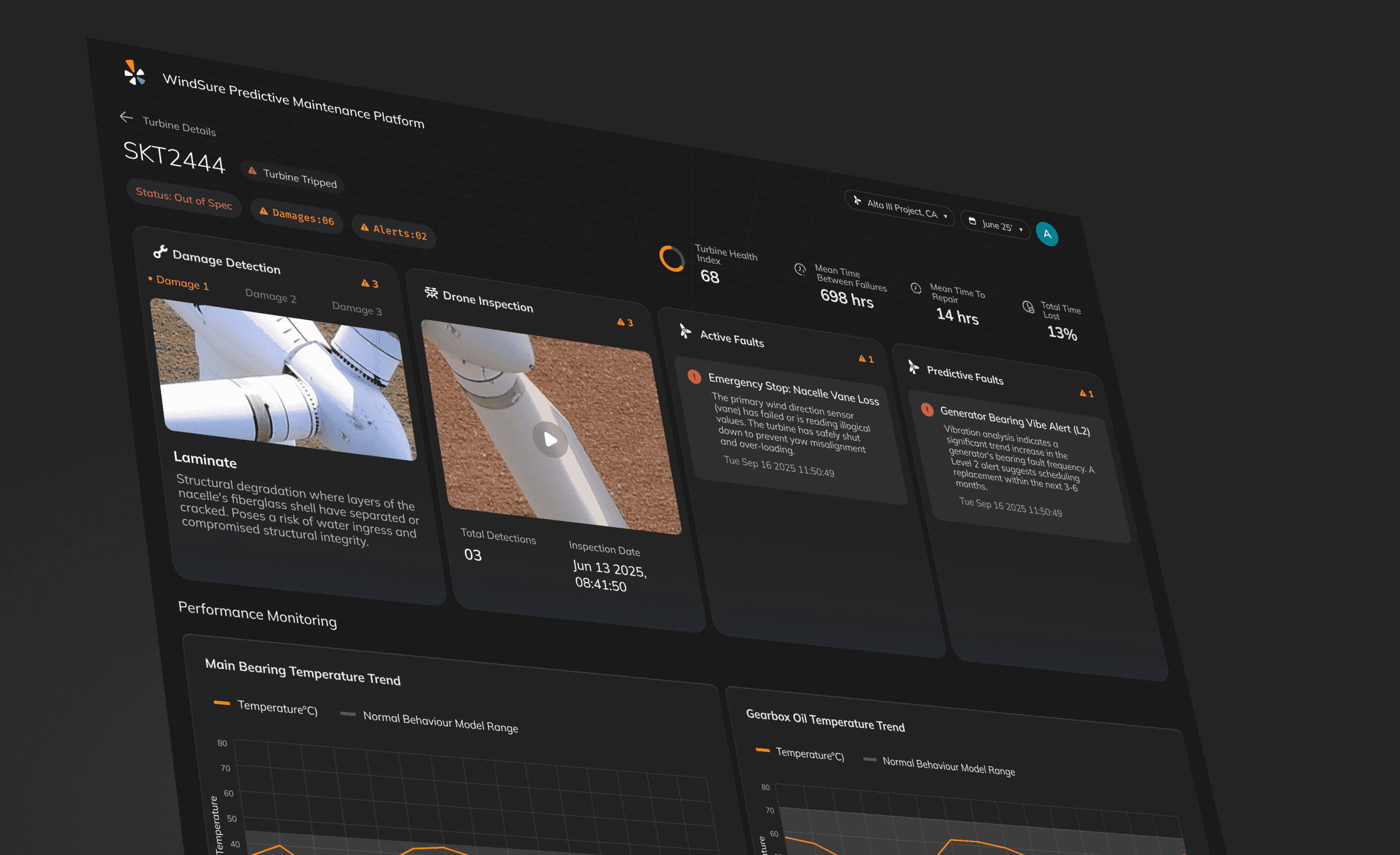
Turbine Monitoring
The Turbine Monitoring screen enables proactive maintenance. Here operators can immediately access predictive and real-time alerts generated by the AI, quickly review any detected damages, and monitor detailed performance metrics to prevent issues before they cause downtime.
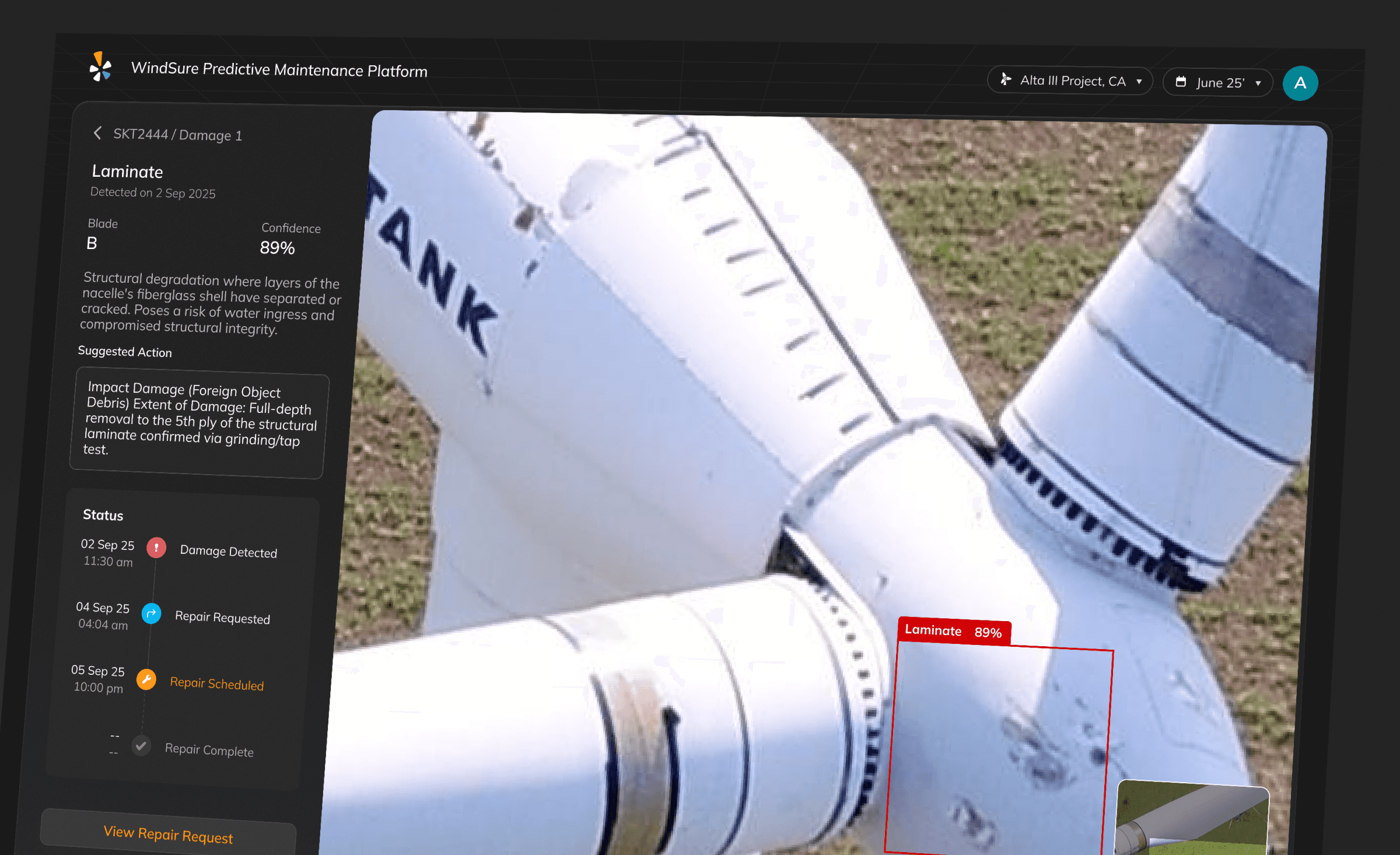
Detected Damage Details
The Damage Detection Screen allows the Operations Engineer to move from insight to action. Here, the engineer can access detailed views of detected damage and verify the AI's analysis. If the AI's detection is confirmed, the engineer can seamlessly schedule the necessary repair directly from this interface
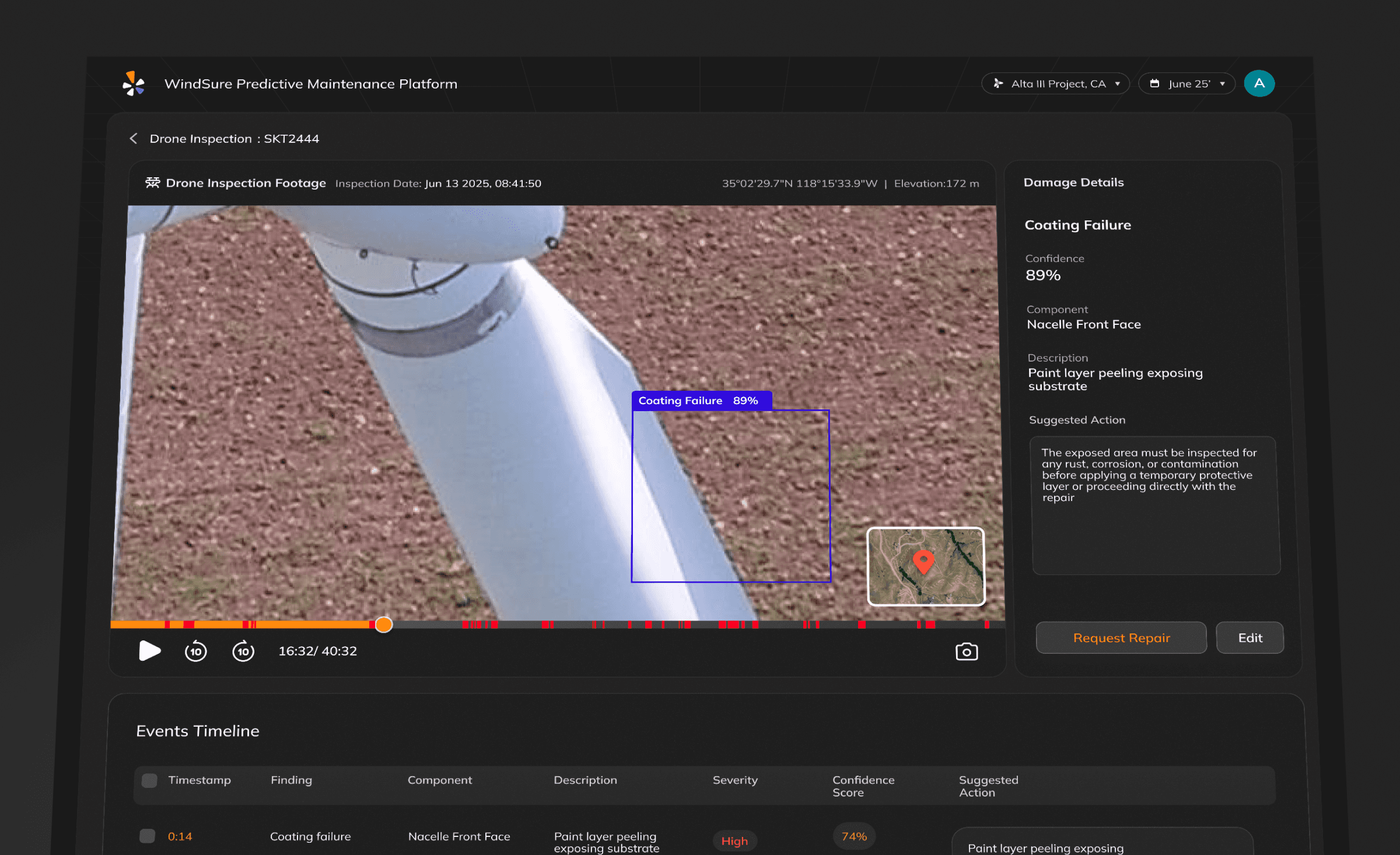
Drone Inspection
The Drone Inspection Screen serves as the hub for visual asset assessment. It allows the engineer to review raw drone footage alongside the AI's visual analysis, clearly highlighting any detected anomalies or damages. From this centralised view, the engineer can seamlessly raise official repair requests for confirmed issues.
Reflection
After gathering insights, I realised the solution needed to fit naturally into how radiologists already work. To do that, I focused on three design